
2x
LTV-to-CAC on paid
Up from 0.6, in one month
AED 500K
paid programme on Meta and TikTok
Taken over, redirected and run
Every instructor launch.
Run on one launch system, except evergreen
The stakes
A paid programme spending more than it earned.
Here’s the thing about break-even. It isn’t a target, it’s a floor, and the number that tells you which side of it you’re standing on is LTV-to-CAC. Below 1.0 you’re paying to acquire people who are worth less than they cost, which is a weird kind of business to run on purpose, and we were at 0.6. Nobody sends a memo about 0.6. So which side of it were we on? The wrong one, for a while, without anyone saying so out loud.
| Role | Senior Director of Marketing and Communications |
| Period | 2025 to now |
| Owned | Revenue generation, growth, product launches and development, web and platforms |
01
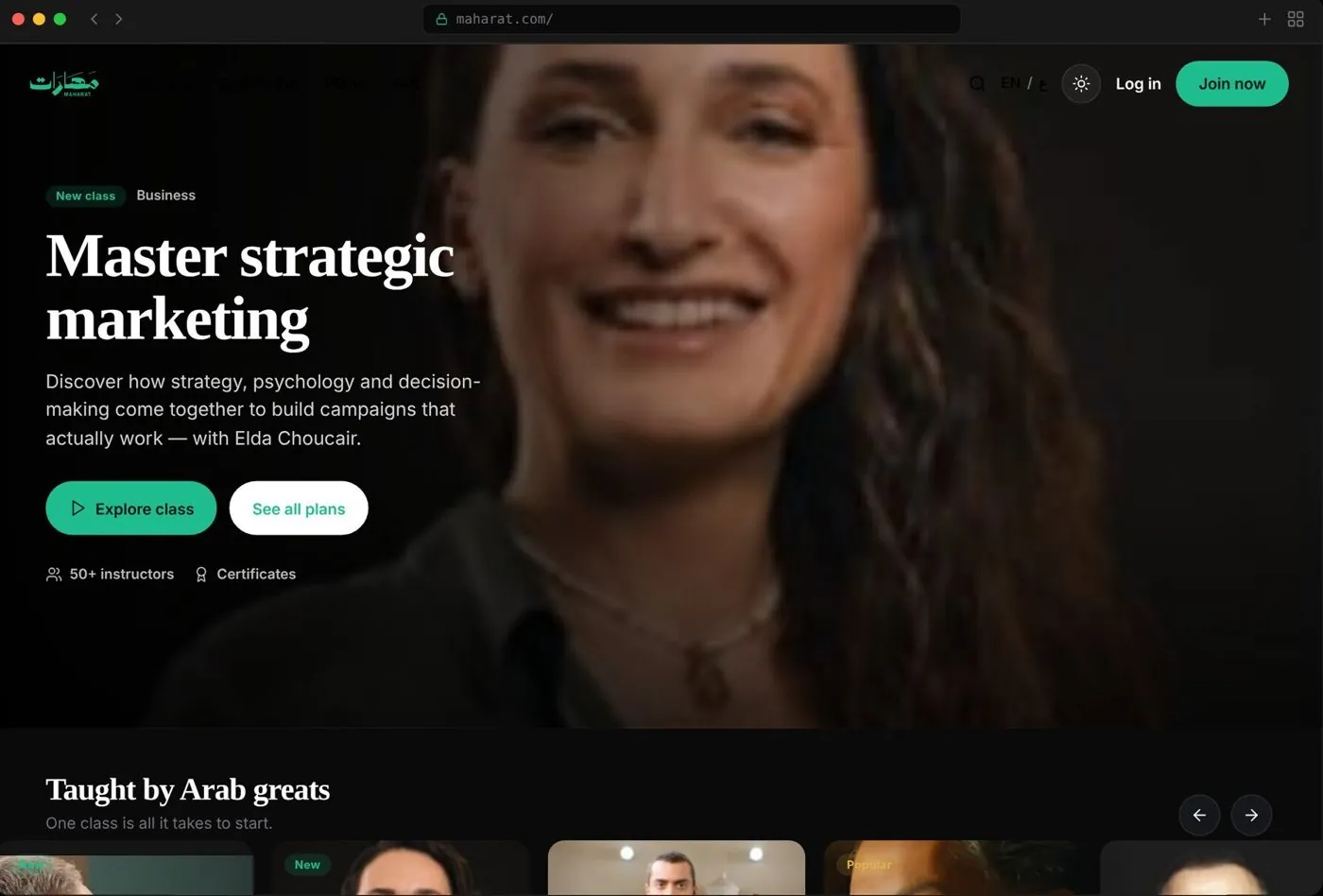
Revenue generation, growth, product launches and development, web and platforms, which is a wide brief until you stop reading it as a list and start reading it as one engine.
02
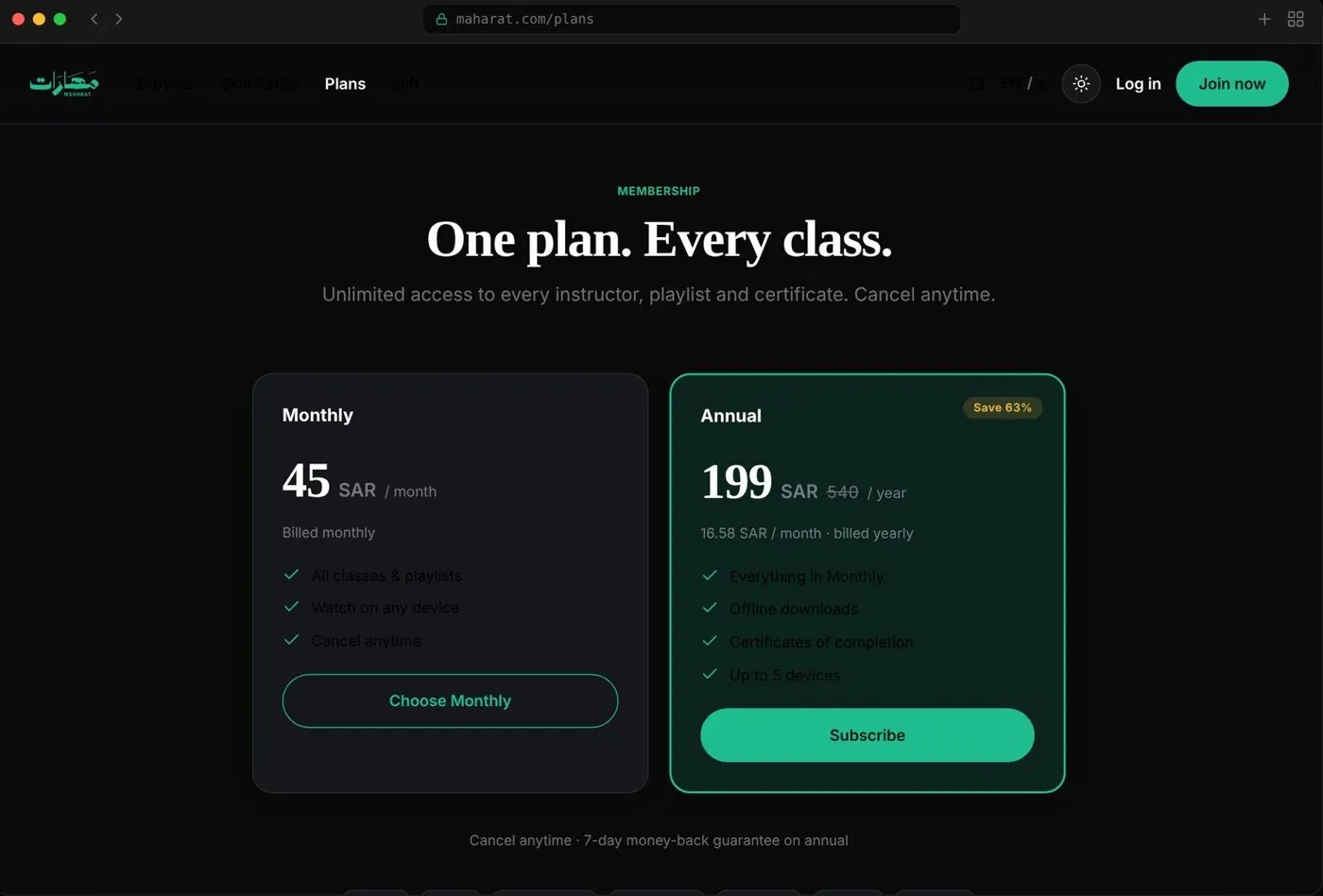
End to end subscription and member growth strategies, because acquisition is only half of a subscription business and the other half is the part people remember to build last.
03
A focus on the learner journey and LXD, plus a TikTok pilot alongside Meta, which is how you find out cheaply whether a new channel actually behaves.

The proof
From 0.6 to 2.0 in one month.
LTV-to-CAC on paid
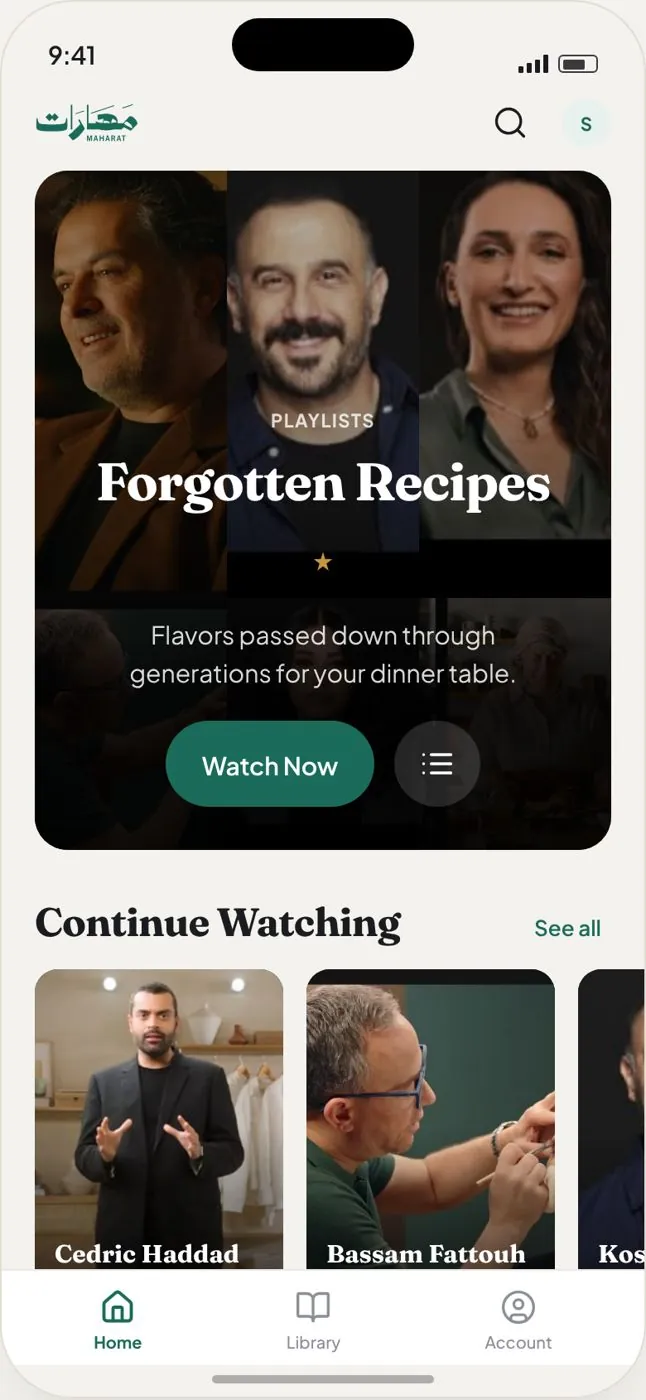
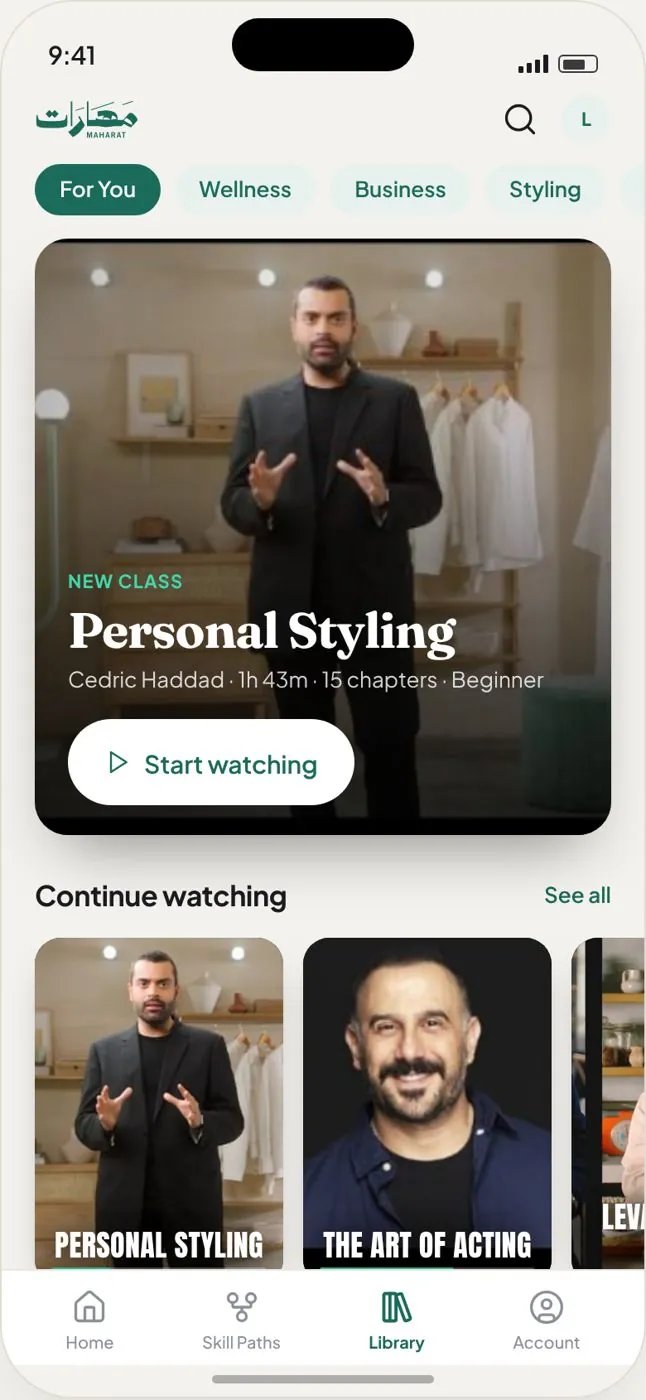
The app


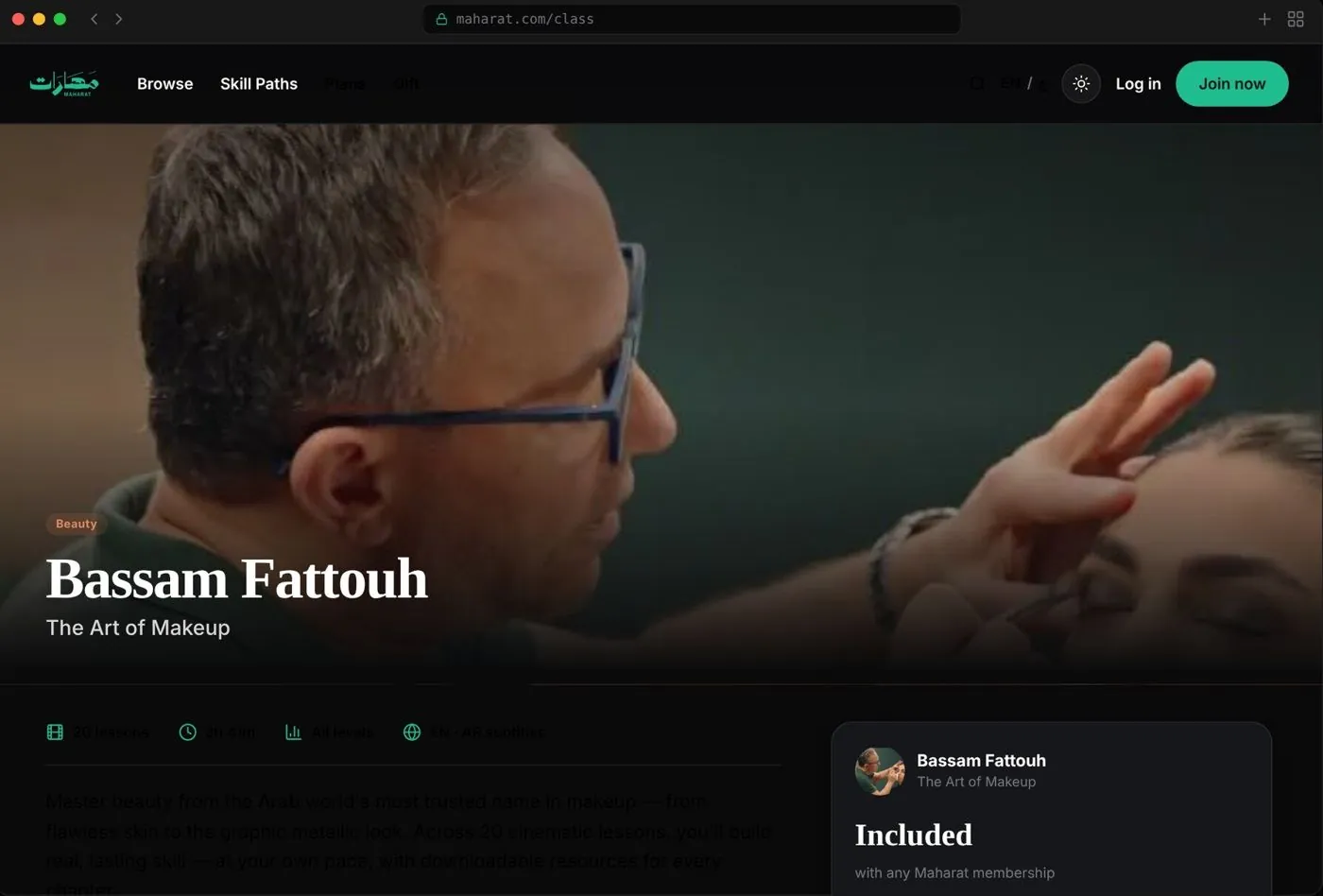
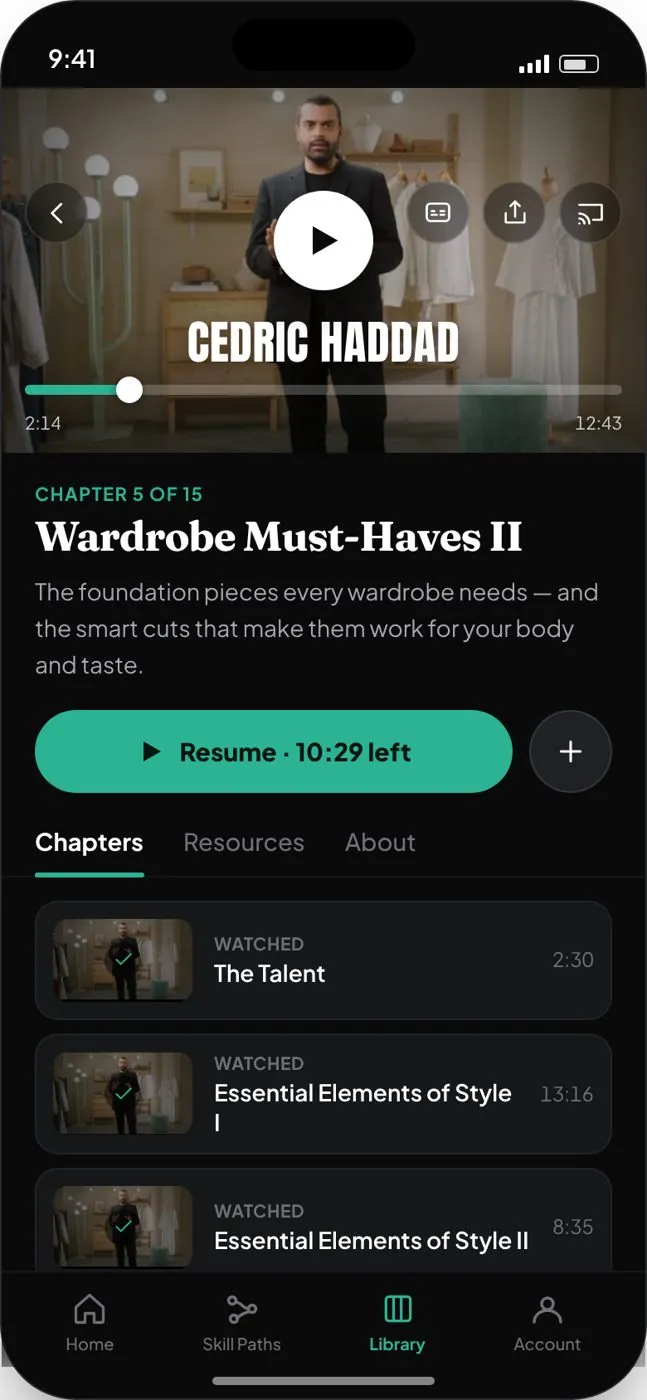
What it means
What actually changed wasn’t the budget, it was that the engine finally got built. I took over marketing and built the blueprints, the product roadmap, and the production and revenue pipelines. I introduced one launch system and ran every instructor launch on it except evergreen. Growth on paid isn’t a campaign, it’s plumbing, and once the plumbing works the same water pressure gets you twice as far.
The long read
The number that decides whether you have a business
Every paid programme has one number that decides whether it’s a business or a hobby, and it isn’t ROAS. It’s LTV-to-CAC. Spend a dirham, get two back over the customer’s life, and you can grow. Spend a dirham and get 0.6 back, and you’re not marketing, you’re subsidising.
Maharat’s paid programme sat at 0.6. Below break-even, spending on Meta and TikTok, which means every new customer was a small, extremely well-targeted loss. I’ve watched this exact scene on every cooking show where the chef tastes the sauce and quietly adds salt. Nobody wants to say the number out loud.
What I did first was not spend smarter
So what did I do? Not what you’d expect. The instinct is to optimise the ad. Better creative, tighter audiences, another A/B test. That’s what I’d have done in year three of my career, and it would have bought me a slightly more efficient way to lose money.
What actually changed was the engine around the ad: the offer, the landing path, the subscription structure, the learner journey. I took over the programme, redirected it, and built the blueprints, product roadmap and revenue pipelines underneath it.
0.6 became 2x in a month. Same platform. Same country. Different machine.
The takeaway
Here’s what I’d tell anyone staring at a bad payback number: the ad is almost never the problem. The ad is the messenger. If your unit economics are broken, better targeting just gets you to the same place faster.
And if I’m honest, this is the least glamorous work in growth. Nobody claps for a subscription structure. It’s still the difference between buying customers and RENTING them at a loss.
Next story · Chapter 01 · Maharat
Every class launches on one calendar I run.
~5,000
paying members, about 1,000 of them subscribers
Your company could be next
Talk about doing this for your team.