560,395
LinkedIn followers
Up from about 90K, 2022 to April 2025
98.7%
of new followers organic
Nov 2023 to Nov 2024
1.5M+
engagements
2022 to Q1 2025
The stakes
When I joined, one LinkedIn page carried every Canonical product, and it had about 90K followers. One page for twenty plus products means every post is a compromise, and a page that talks about everything reads as a page about nothing. The audience was already there. So what was the reason to follow?
| Role | Communications Manager |
| Period | 2022 to 2025 |
| Owned | GTM and launch strategy on social, and the comms calendar |
01
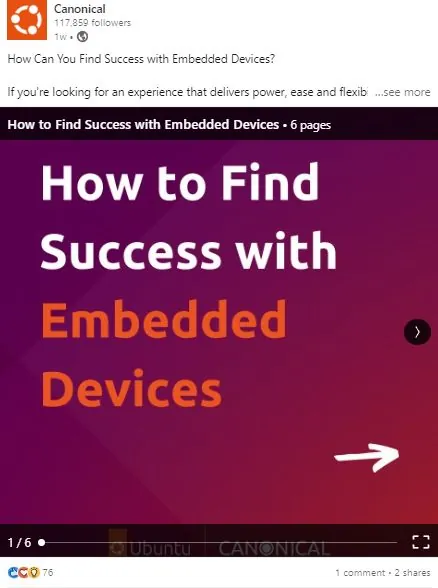
A topic strategy: AI, cloud, security and open source, with engagement rates above benchmark, which is the boring name for the thing that actually fixes a feed.
02
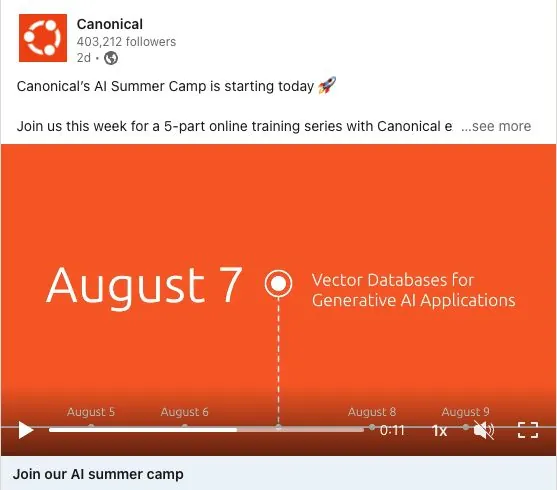
Comms calendar per product, vertical and geography, with product and engineering, because the people who build the product are the only ones who know why it’s interesting.
03
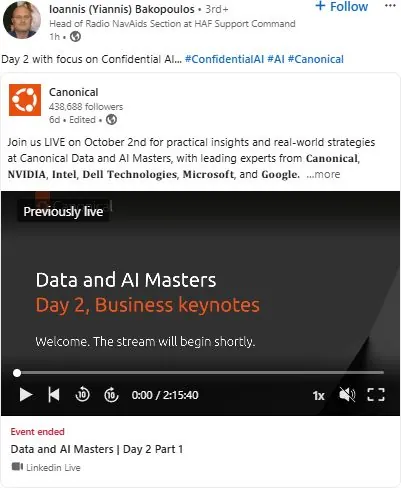
Demand and revenue generation from developers and C-suite technical buyers, and I led the media and video agencies, which means speaking to two audiences who trust completely different things.
The proof
Net new LinkedIn followers per year
2022 to April 2025
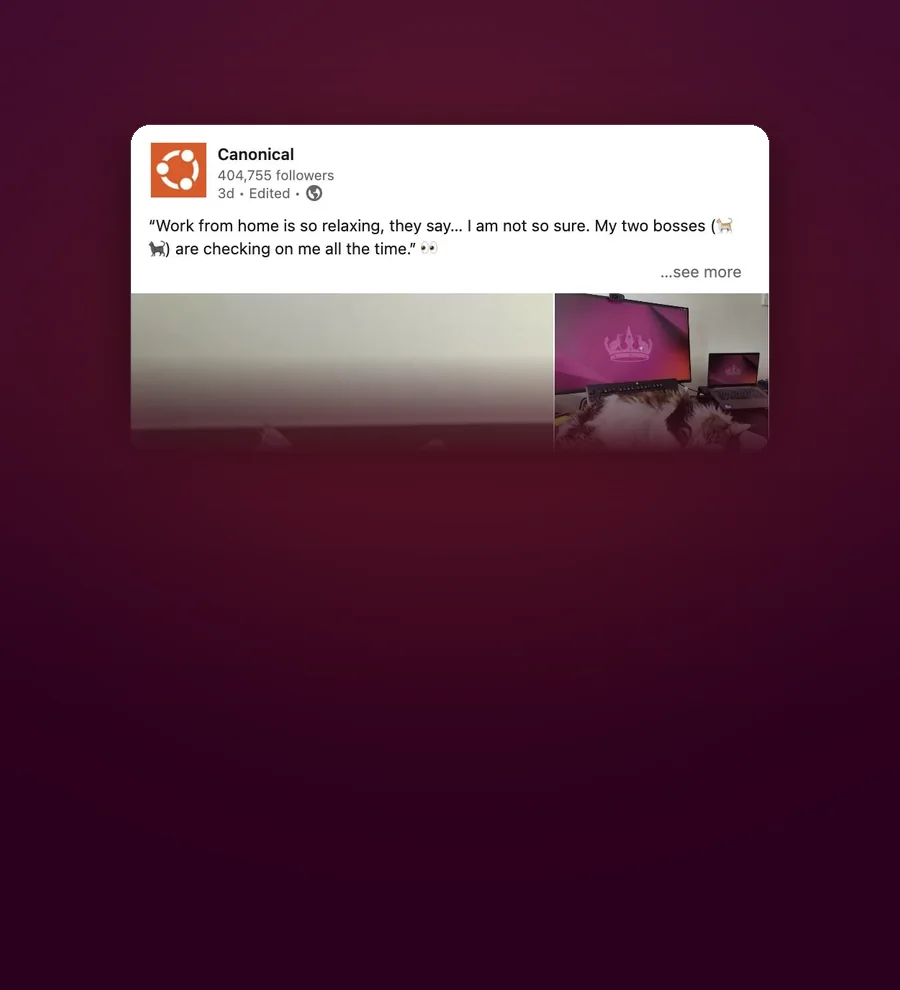
LinkedIn followers
Second only to Red Hat · April 2025
The home page
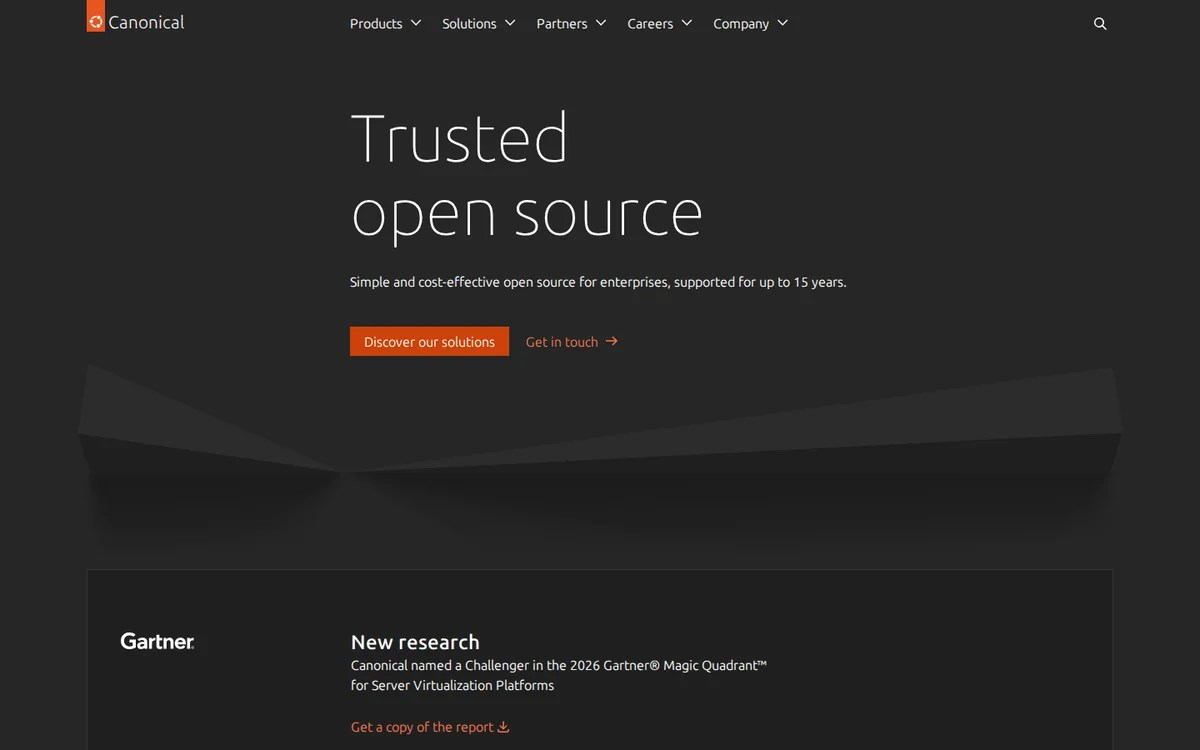
Then · 2022
In their words
When I joined the company we were hardly at 90K followers on LinkedIn, and now we are at a whopping 500K+.
Prithviraj Kola · Product Marketing Manager, Cloud, Canonical
His strategic direction played a key role in driving significant growth across Canonical’s social media platforms.
May Myo Set Htwe · Social Media Management, Canonical
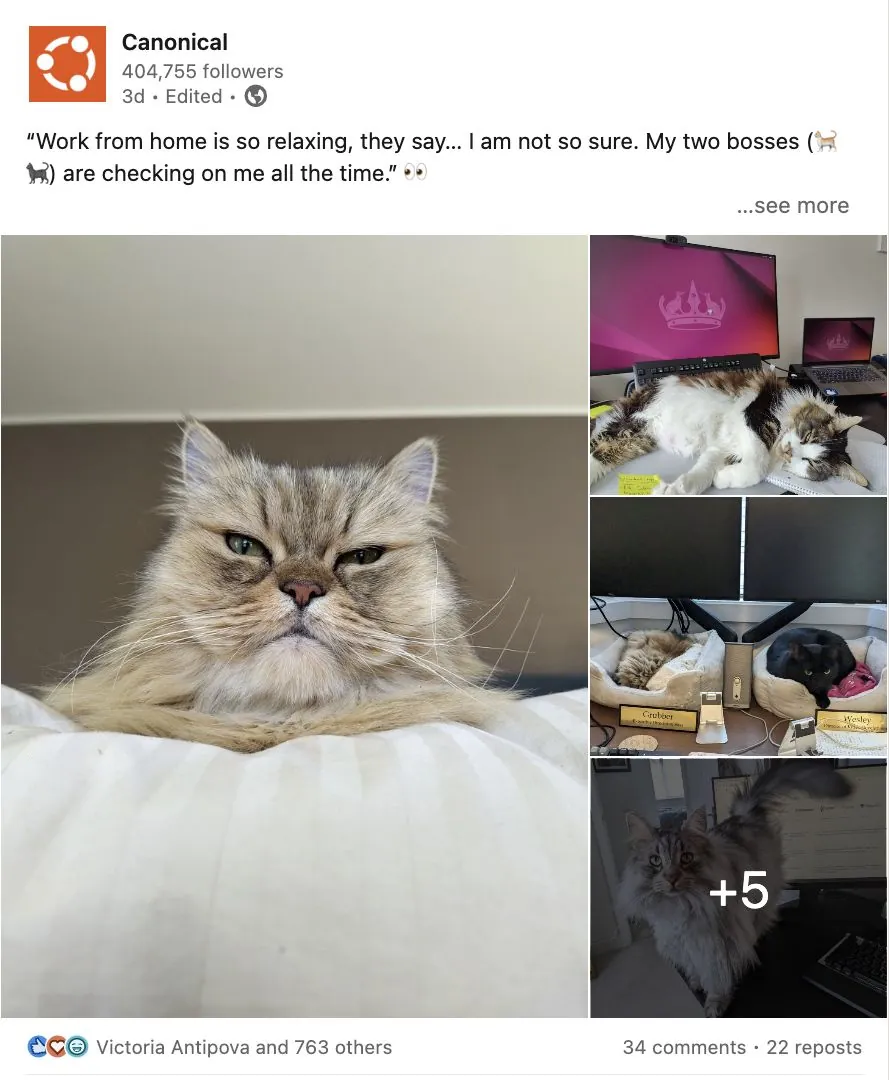
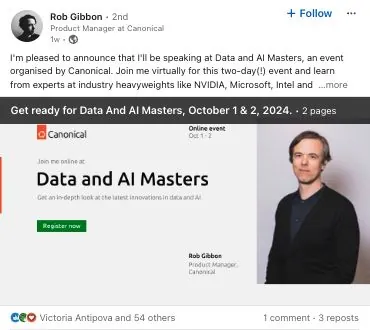
TL;DR
A topic strategy and a comms calendar per product, vertical and geography. The structure gave AI, cloud, security and open source their own thread each, with product and engineering in the room. 98.7% of new followers came in organic, which tells you the growth wasn’t bought.
What it means
The Cheesecake Factory has a menu with about 250 items and somehow it works. Most corporate LinkedIn pages attempt the same trick with a fraction of the craft, and it fails, because a feed isn’t a menu. A feed is a radio station. You can’t play twenty genres and expect anyone to stay on the frequency.
Canonical’s page carried twenty-plus enterprise products and roughly 90K followers. One voice for everything meant nothing was really being said.
The fix I argued for was a topic strategy: AI, cloud, security and open source, each with its own thread and its own audience inside the same follow. Each topic got a structure that let it be followed on purpose.
Then a comms calendar per product, vertical and geography, built with product and engineering rather than about them. The people who build the thing are the most credible source you have, and they’re almost always the last ones asked.
560,395 followers by April 2025, up from about 90K. 98.7% of new followers organic, so no follower buying and no contest farms. 1.5M+ engagements.
The part I care about more than the follower count: demand and revenue generation from developers and C-suite technical buyers. Followers are the receipt, and I care about them the way I care about a receipt, which is that it proves the transaction happened.
What would I tell someone inheriting a corporate page tomorrow? Stop writing for the brand. Start writing for the person who has to justify reading you at 8am on a Tuesday.
If I only got one sentence it would be this: a page that stands for everything stands for nothing. Pick the threads, staff them, and let the feed be a radio station with an actual format.
Next story · Chapter 02 · Canonical
Revived a major developer conference over 3 iterations.
3
Ubuntu Summits run, MC on stage in 2024
Your company could be next
Talk about doing this for your team.